

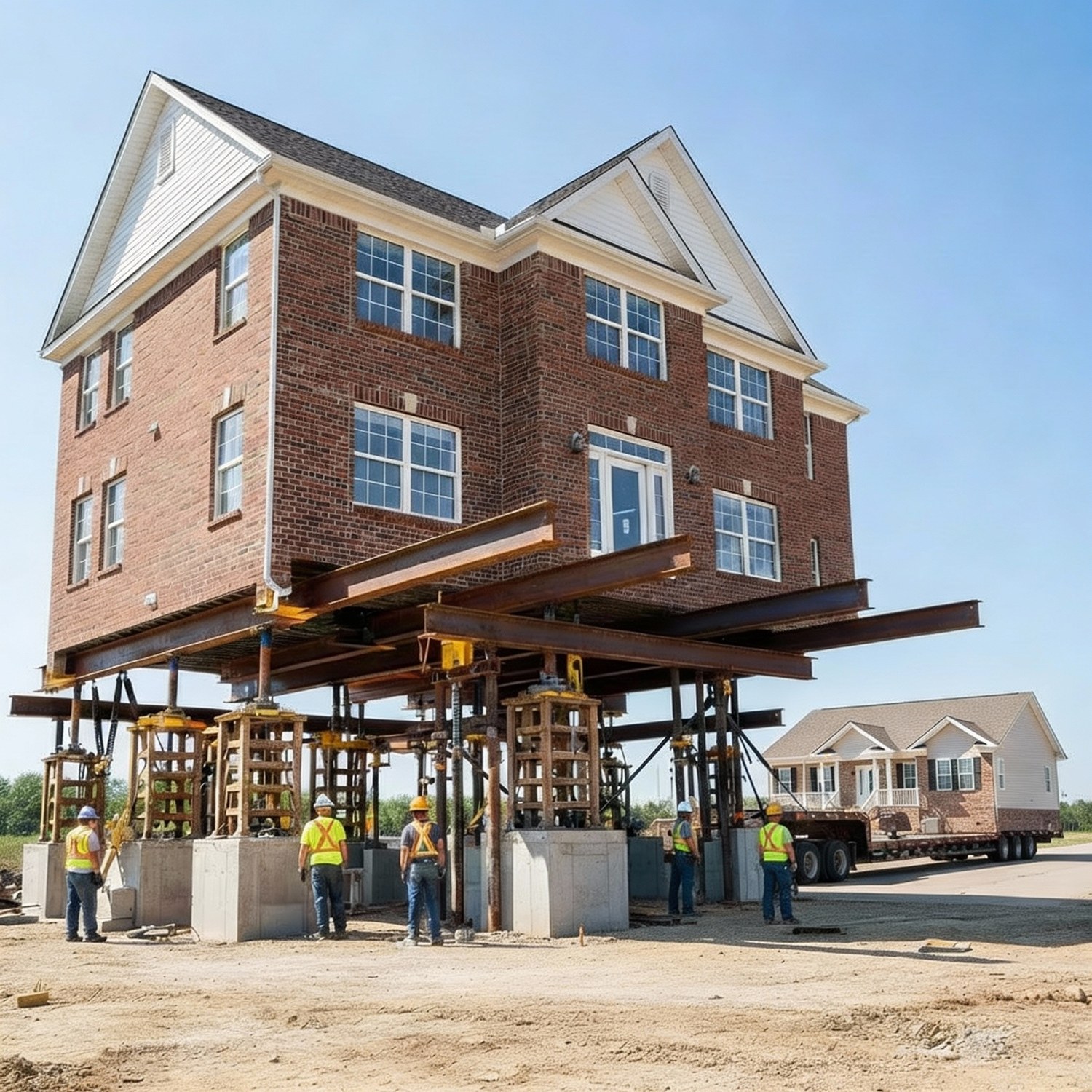

House Lifting Services in India: Cost, Process, Benefits & When You Need It
House lifting services have emerged as a smart and practical solution for homeowners facing issues such as flooding, low plinth height, weak foundations, or changing road levels. Instead of demolishing and rebuilding an entire house, house lifting allows the existing structure to be raised safely using advanced engineering techniques. In India, this method is gaining popularity due to its cost-effectiveness, time savings, and ability to preserve the original structure.
What Are House Lifting Services?
House lifting is a structural engineering process in which an existing house is raised vertically to a desired height using hydraulic jack technology. The entire structure—including columns, beams, and slabs—is lifted in a controlled and synchronized manner, ensuring that the building remains intact and stable throughout the process.
House lifting services are commonly used for RCC houses, independent homes, old buildings, and even occupied structures, provided a proper engineering assessment is carried out.
When Do You Need House Lifting?
House lifting services are recommended in several practical situations, such as:
Flood-prone areas where raising the plinth level helps prevent water damage
Low-lying houses affected by poor drainage or rising road levels
Foundation strengthening for old or weakened structures
Adding extra height before roof lifting or floor expansion
Soil settlement issues causing uneven levels
Instead of rebuilding from scratch, house lifting offers a safer and more economical alternative.
The House Lifting Process Explained
A professional house lifting process follows a step-by-step engineering approach:
Site Inspection & Structural Assessment
Engineers inspect the building, foundation condition, soil type, and load distribution to determine feasibility.
Planning & Design
A detailed lifting plan is prepared, including jack placement, lifting height, and safety measures.
Installation of Hydraulic Jacks
High-capacity hydraulic jacks are installed at strategic load-bearing points.
Controlled Lifting
The house is lifted slowly and uniformly to avoid cracks, vibration, or stress on the structure.
New Foundation or Plinth Construction
Once lifted, a new foundation or extended columns are constructed at the required height.
Final Stabilization
The structure is securely fixed, aligned, and checked for safety before completion.
This method ensures zero demolition and minimal disruption.
